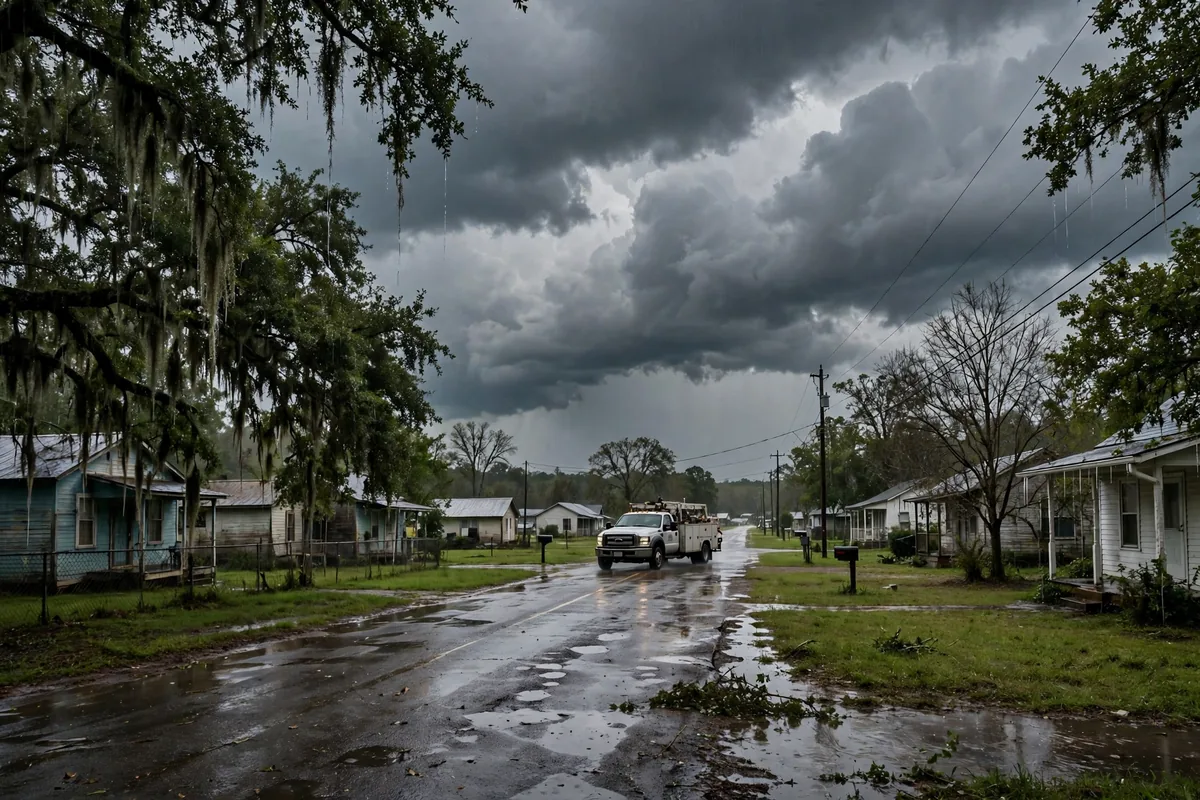
Tornado & Storm Flood Water Damage Restoration In Anderson, AL
For Tornado & Storm Flood Water Damage Restoration Anderson, AL, call once and talk to a person — a local pro can usually arrive in 30–60 minutes, 24/7, for extraction, drying and cleanup.
MVBHDJSLCS★★★★★“I was impressed by the level of industrial drying” — Wayne Little, Albertville
Free To CallAnswered 24/7Independent Local ProsNo ObligationServing 31 Alabama CitiesOne Free Call
Free To CallAnswered 24/7Independent Local ProsNo ObligationServing 31 Alabama CitiesOne Free Call
Quick Answer
Storm water in your Anderson home? One free call puts a local pro on the road to you, usually arriving in 30–60 minutes. FEMA's National Risk Index puts Lauderdale County's tornado risk at Relatively High (92.0 of 100) — Anderson homes see the damage that follows. The median Anderson home was built in 1987 — older framing holds water longer and dries slower.
Is My ZIP Covered?
Type your Anderson ZIP code to check it against the ZIPs we serve here.
One free call connects you with a local pro in Anderson for the storm and flood work below.
Water Extraction Services
In Anderson, water extraction starts with the rooms that hold the most water and works outward. Pros use submersible pumps and extraction wands, then meter the walls and floors so the drying plan for your Lauderdale County home is based on readings, not guesses.
After the water drops, Anderson homes are left with mud, silt and ruined belongings. Flood cleanup clears the debris, washes down surfaces and gets the structure ready to dry — the unglamorous work that decides whether a home recovers cleanly.
Extraction removes the water you can see; structural drying removes the water you cannot. In Anderson's older homes — median build year 1987 — moisture hides in cavities, so pros dry with measured airflow and check progress with meters, not timelines.
Roof tarping is the fastest way to stop storm damage getting worse in Anderson. Pros cover torn decking and missing shingles with a secured tarp, then the water already inside can be extracted and dried.
When storm flooding overwhelms drains in Anderson, sewage can enter through the lowest fixtures. Pros handle it as contaminated water from the first minute — extraction, removal of unsalvageable materials, disinfection and drying, in that order.
Mold can start growing within a day or two of a Anderson flood. Remediation removes colonies on walls, baseboards and in crawl spaces, contains the work area so spores do not spread, and fixes the moisture that fed them.
Anderson is a small town without separate named neighborhood districts, so we list coverage by the ZIP areas we serve. Wherever you are in Anderson, the same free call connects you with a local pro.
Anderson — ZIP 35610
If your address is in 35610, you are inside the local coverage area: one free call reaches a pro for extraction, drying and cleanup anywhere in this part of Anderson.
Storm Water In Your Anderson Home Right Now?
Water spreads fast after a storm. One free call connects you with a local pro who can start today.
Real reviews from Alabama homeowners after storms and floods.
TC
Travis Calhoun
★★★★★
Outstanding water extraction service in Mobile after storm surge backed up into our retail shop. They saved our commercial inventory by responding in the middle of the night. True lifesavers.
ER
Evelyn Ross
★★★★★
Tornado winds shattered our back patio doors in Prattville, soaking our hardwood floors. The crew deployed drying mats and industrial blowers, successfully salvaging the original wood without cupping.
GM
Greg Montgomery
★★★★★
Professional, punctual, and equipped with serious industrial gear. They completely remediated storm runoff that flooded our garage and crawl space in Decatur. Highly recommended.
AW
Alicia Warren
★★★★★
They did a great job drying out our storm-damaged home in Dothan. It took an extra day due to high outdoor humidity, but the technicians monitored the progress continuously.
KO
Kenneth O'Connor
★★★★★
A severe supercell tore through Cullman, damaging our roof and leaving standing water in the living area. The crew’s rapid water extraction and antimicrobial treatment prevented secondary rot completely.
LR
Latoya Robinson
★★★★★
Exceptional customer service during an extremely stressful time. Their project manager worked directly with our insurance adjuster, making the flood restoration process smooth and transparent.
RH
Richard Henderson
★★★★★
Severe flooding swamped our basement workshop in Florence. They pumped out the water, sanitized all concrete surfaces, and hauled away ruined drywall quickly.
MB
Megan Bradley
★★★★★
Fast response following a tornado warning in Madison. Rainwater penetrated our attic vents, but they dried the insulation and ceiling joists before any collapse occurred.
TA
Thomas Albright
★★★★★
Equipment was quite noisy for three days, but that's expected during severe structural drying. They completely resolved the storm water damage in our Enterprise home.
HP
Hannah Phillips
★★★★★
Flash flooding pushed river water into our crawl space in Wetumpka. They completely replaced the vapor barrier, treated the wood framing, and installed a sump system. Exceptional craftsmanship.
CH
Clifford Hayes
★★★★★
When strong straight-line winds sheared off our siding in Gadsden, heavy rain soaked our drywall. The team performed precise flood cuts, dried the wall cavities, and left the home pristine.
NM
Natalie Mercer
★★★★★
Compassionate and efficient team. After the tornado touched down near Opelika, they secured our property and prevented structural water issues from worsening.
Tornado & Storm Flood Water Damage Restoration Near Anderson
Storm help is close: these are the six nearest served cities to Anderson.
The crews who cover Anderson stage equipment inside Lauderdale County, which is how 30–60 minute arrivals hold up even on storm nights.
Extraction, drying, selective removal, cleaning and mold prevention — in that order. Anderson pros document each step with photos and moisture logs, which also supports any insurance claim.
Mostly wind, water and time. Tornadoes and straight-line winds open roofs and siding; heavy rain floods low ground and crawl spaces; small leaks hide until a stain appears. Lauderdale County's riverine flood risk is rated relatively moderate by FEMA (84.2 of 100).
They can be. 45.6% of Anderson homes predate 1980, with a median build year of 1987. Older framing, plaster and layered floors hold moisture longer, so pros meter these homes more carefully and dry to readings.
Coverage in Anderson runs over 35610 — every ZIP the town has. If your address sits right on a boundary, call: the crews work the whole of this part of Lauderdale County.
If a pipe is the source, find the shutoff. If the roof is the source, put a bucket under the drip and stay off ladders. Photograph, then phone — in that order.
Two different claims cover two different waters in Alabama: storm damage through a damaged roof (usually homeowners) and rising flood water (usually a separate flood policy). The crew's photos and moisture log support both — ask them to document before removing anything.
Three to five days is typical after extraction, verified by daily meter readings. Thick plaster, hardwood and crawl spaces in Anderson homes can add days — the readings, not the calendar, say when it is done.
In Alabama humidity, assume the clock is 24–48 hours. If a musty smell appears in your Anderson home after a storm, growth has likely started and should be checked, not sprayed and hoped away.
It is set by the damage, not the postcode: a one-room leak dried on day one costs a fraction of a flooded floor found after a week. The assessment and the call are free; the quote comes before the work.
Local Factors: Why Storm Flood Damage Hits Anderson Homes
In Anderson, the county risk profile is the job profile. FEMA's National Risk Index rates the county relatively high for tornadoes (92.0 of 100), relatively moderate for riverine flooding (84.2 of 100), relatively high for strong wind and relatively low for hurricane remnants.
The housing stock adds to it. Anderson has about 410 residents and 193 homes; 45.6% were built before 1980 and 90.4% are owner-occupied. At roughly 721 feet elevation, water behaviour differs street by street — low lots and crawl-space homes flood first, and older framing dries slowest.
Anderson At A Glance
45.6%
Homes From Before 1980
U.S. Census Bureau, ACS 2024
Relatively High
FEMA Tornado Risk (County)
FEMA NRI, Dec 2025 release
Relatively Moderate
FEMA River Flood Risk (County)
FEMA NRI, Dec 2025 release
410
People In Anderson
U.S. Census Bureau, ACS 2024
721 ft
Elevation
USGS National Map, 2024
90.4%
Homes Owner-Occupied
U.S. Census Bureau, ACS 2024
What Is Tornado & Storm Flood Water Damage Restoration In Anderson?
Simply put: get the water out, dry the structure to a measured standard, remove what cannot be saved, and make sure mold never gets its chance. The backdrop is Lauderdale County's FEMA profile: tornado relatively high (92.0 of 100), riverine flooding relatively moderate (84.2 of 100). With that risk profile, speed is not a luxury — it is the whole job. Homeowners comparing options can also read how the work is handled in Athens and Ardmore.
What Are The Signs Of Storm Water Damage In A Anderson Home?
The clearest signs are standing water, a growing ceiling stain, spongy or buckled floors, and a musty smell that was not there before the storm. In Anderson homes, water also hides in wall cavities, so a room can look dry while the framing stays wet. Our guide to signs of water damage in walls shows what to look for.
Here is what the data says about Anderson. 92.0 score / 100 — Rank 14 Of The 31 Alabama Cities We Serve · 84.2 score / 100 — Rank 15 Of The 31 Alabama Cities We Serve. Crews plan around those figures — they are also listed in the comparison section below.
How Do Tornadoes And Storms Flood Anderson Homes?
Three ways, mostly. Tornadoes and straight-line winds tear shingles and siding loose, and rain pours into attics and walls. Flash flooding pushes water through doors, garages and crawl spaces on lower ground. And a damaged roof can leak quietly for days before a stain ever shows. Elevation here is roughly 721 feet — enough to matter between one street and the next, never enough to make any Anderson home immune.
What Happens To Wet Drywall And Insulation?
Drywall wicks water upward past the visible waterline, and wet insulation holds moisture against the framing. Pros measure the climb and cut only what cannot dry — in Anderson homes, that check separates a drying job from a demolition.
What Does The Restoration Process Look Like In Anderson?
Extraction first. Then a drying plan written from meter readings — equipment placed room by room and adjusted at daily checks. Unsavable materials are removed early and photographed for your records — leaving them in place is how mold gets its foothold. The county-wide picture is on our Lauderdale County page.
Expect real equipment, not a mop: water extraction first, then structural drying — an air mover and a dehumidifier per wet room — guided by moisture meter readings and thermal imaging. Crews also open wet drywall and insulation where needed, check the subfloor, inspect the crawl-space vapor barrier, and tarp a damaged roof the same visit.
What Affects The Cost In Anderson?
The same four, everywhere: volume of water, rooms and materials affected, hours before extraction began, and whether mold or contamination is present. Nobody can price your Anderson job from a desk. The pro assesses in person, quotes in writing, and starts only when you say yes.