
When Is Storm Water Damage An Emergency?
Reviewed By Hamza, CEO · Updated October 24, 2026 · 6 min read
 Call (800) 555-0100 — Free
Quick Answer
Yes — if water is standing, spreading, still coming in, touching a ceiling or carrying sewage, it is an emergency, and emergency water damage restoration should start the same day. In Alabama's humidity, mold can start within 24–48 hours, so extraction and drying in the first day decide how much of your home can be saved.
What Makes Storm Water Damage An Emergency?
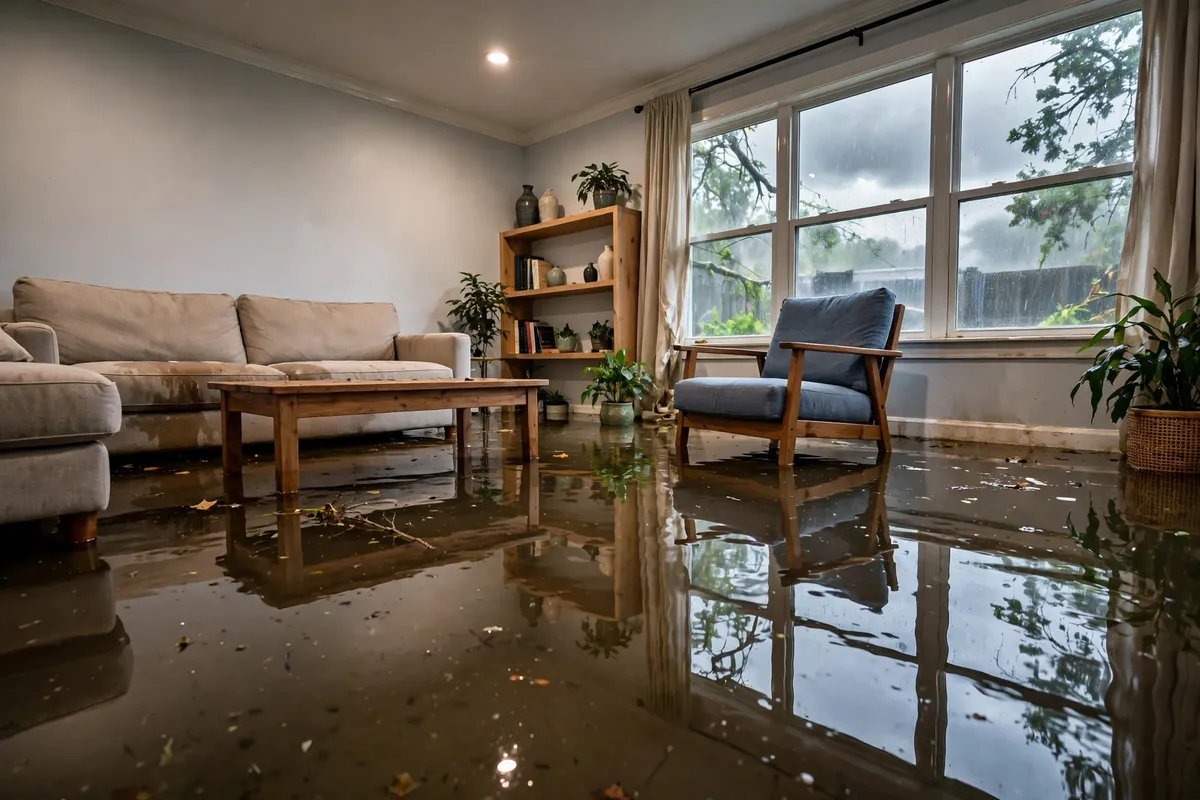
Storm water damage becomes an emergency the moment water is standing, spreading or still coming in — because damage grows by the hour, not by the day. Wet drywall wicks water upward, insulation slumps and holds moisture against framing, and in Alabama's humidity mold can start growing on wet materials within 24–48 hours. If any of the situations below sound like your home tonight, treat it as an emergency and call — one free call connects you with a local pro who can arrive in 30–60 minutes.
Five Signs You Are Looking At An Emergency
The fastest test is simple. First: is water standing anywhere it should not be — a room, a basement, a crawl space? Second: is it still coming in, through a roof opening, a door, or up through a drain? Third: is a ceiling stained, bulging or dripping? Fourth: has sewage or dirty flood water touched any living space? Fifth: do you smell a strong musty odor that started with the storm? Any one of these means the clock is running.
What Is Usually Not An Emergency?
A small, contained leak you have already stopped — a bucket under a drip with no spreading, no ceiling sag and no smell — can often wait for a scheduled visit. So can an old, dry water stain that has not changed in months. The difference is movement: water that is active, spreading or dirty is an emergency; water that is finished and dry is a repair.
Water Inside After The Storm?
Call (800) 555-0100 — FreeWhat Should You Do In The First Hour?
Keep people and pets out of flooded rooms, especially near outlets and appliances. If you can reach your breaker box from dry ground, turn off power to wet rooms. Take photos and video of every damaged area before moving anything — your insurer will want them. Move small belongings to dry ground, put a bucket under any drip, and never climb onto a wet or damaged roof. Then call: tarping, extraction and drying started in the first hours save more of a home than any later repair.
What Do Pros Do That A Mop Cannot?
Pros extract water with pumps and truck-mounted equipment, then dry the structure itself — the framing, subfloor and wall cavities a mop never reaches. They measure moisture with meters, log the readings daily, remove only the materials that cannot be saved, and sanitize anything dirty flood water touched. That measured drying is what stops mold before it starts.
Does Insurance Treat Emergencies Differently?
Most policies expect you to prevent further damage — which is exactly what tarping, extraction and drying do. Document everything, keep receipts, and notify your insurer early. Whether the underlying damage is covered depends on its cause: wind and roof damage from a storm is a different claim from ground flooding, which usually needs a separate flood policy.
Why Alabama Storms Turn Small Leaks Into Emergencies
Alabama sits in Dixie Alley: FEMA's National Risk Index scores the average Alabama county 78.4 of 100 for tornado risk, and counties like Jefferson reach 99.6. Add slow-moving tropical rain, flash flooding, and a housing stock where 42% of homes predate 1980, and a 'small' storm leak here is very often the start of a big one. When in doubt, call — the call is free, and a pro can tell you in one visit whether you are looking at an emergency or a repair.
Frequently Asked Questions
Straight answers, in plain words.
Still Have Questions? Call Free
Talk it through with a local pro — the call is free and there is no obligation.
(800) 555-0100Reviewed By Hamza
CEO, Alabama Storm Flood Pros
Hamza is a CEO of this company and have great experience for solving the issues related to the local home owners in Alabama.
Updated October 24, 2026
Need Tornado & Storm Flood Water Damage Restoration Help In Alabama?
One free call connects you with a local pro who can arrive in 30–60 minutes.
Call (800) 555-0100Free Call · Answered 24/7 · Local Pros Near You