Emergency Tornado & Storm Flood Water Damage Restoration In Auburn University, AL
Water coming in now? Emergency Tornado & Storm Flood Water Damage Restoration Auburn University, AL starts with one free call — a local pro in 30–60 minutes, 24/7. Do not wait for morning.
One free call connects you with a local pro in Auburn University for the storm and flood work below.
Emergency Water Extraction Services
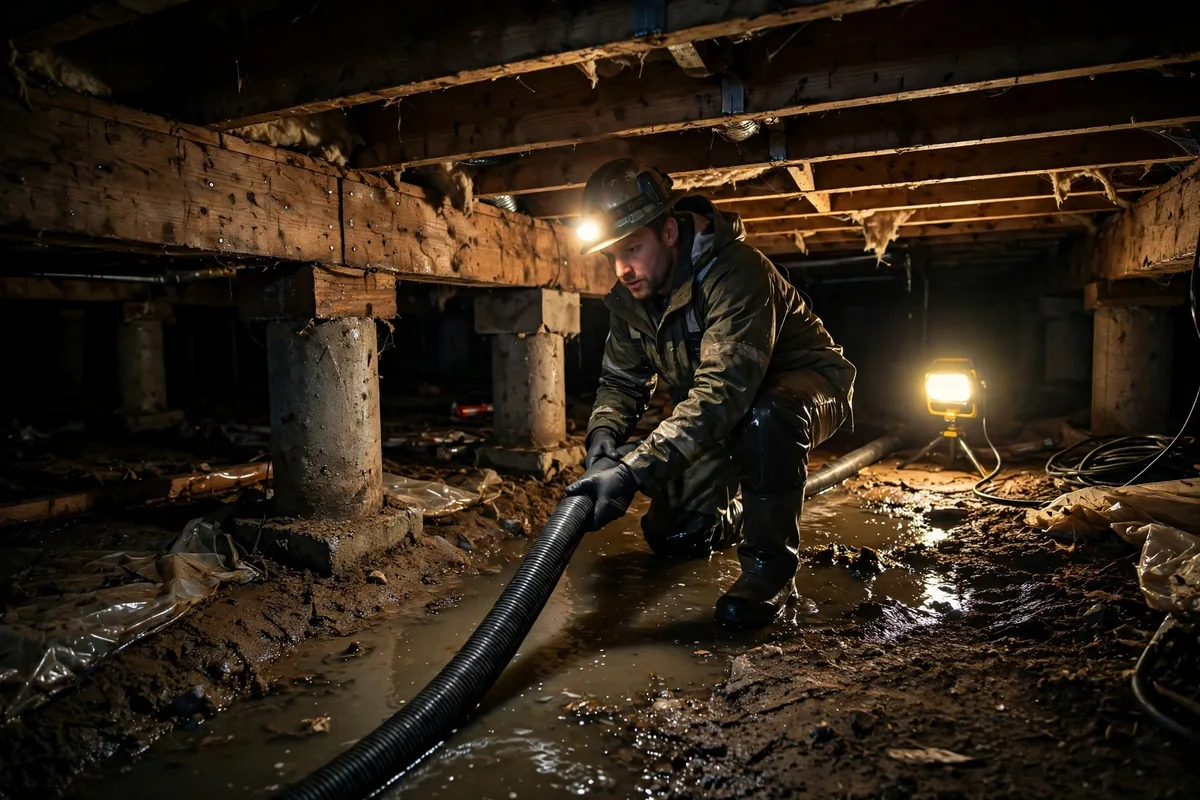
When storm water gets into a Auburn University home, extraction is the first job. Local pros pump out standing water and pull it from carpets and padding with truck-mounted extractors — speed is what keeps a flood from becoming a rebuild.
Storm drains and septic systems back up when Lee County creeks rise, and that water is not clean. Sewage cleanup in Auburn University means removing contaminated water, disposing of what cannot be sanitised and disinfecting every surface it touched.
After the water drops, Auburn University homes are left with mud, silt and ruined belongings. Flood cleanup clears the debris, washes down surfaces and gets the structure ready to dry.
A torn roof over a Auburn University home lets every new shower pour straight in. Emergency tarping seals the damage the same day — a heavy tarp, anchored properly, that buys your home dry time until permanent repairs are scheduled.
Drying is where Auburn University homes are really saved. Air movers and dehumidifiers pull moisture from framing, subfloors and wall cavities over several days, with meter readings proving the structure is returning to dry standards.
Mold can start growing within a day or two of a Auburn University flood. Remediation removes colonies on walls, baseboards and in crawl spaces, contains the work area so spores do not spread, and fixes the moisture that fed them.
Neighborhoods And Areas We Serve In Auburn University
Auburn University is a small town without separate named neighborhood districts, so we list coverage by the ZIP areas we serve. Wherever you are in Auburn University, the same free call connects you with a local pro.
Auburn University — ZIP 36849
The 36849 area of Auburn University — town streets, county roads and the homes between them — is served on the same 30–60 minute standard as everywhere else we cover.
Real reviews from Alabama homeowners after storms and floods.
LR
Latoya Robinson
★★★★★
Exceptional customer service during an extremely stressful time. Their project manager worked directly with our insurance adjuster, making the flood restoration process smooth and transparent.
RH
Richard Henderson
★★★★★
Severe flooding swamped our basement workshop in Florence. They pumped out the water, sanitized all concrete surfaces, and hauled away ruined drywall quickly.
MB
Megan Bradley
★★★★★
Fast response following a tornado warning in Madison. Rainwater penetrated our attic vents, but they dried the insulation and ceiling joists before any collapse occurred.
TA
Thomas Albright
★★★★★
Equipment was quite noisy for three days, but that's expected during severe structural drying. They completely resolved the storm water damage in our Enterprise home.
HP
Hannah Phillips
★★★★★
Flash flooding pushed river water into our crawl space in Wetumpka. They completely replaced the vapor barrier, treated the wood framing, and installed a sump system. Exceptional craftsmanship.
CH
Clifford Hayes
★★★★★
When strong straight-line winds sheared off our siding in Gadsden, heavy rain soaked our drywall. The team performed precise flood cuts, dried the wall cavities, and left the home pristine.
NM
Natalie Mercer
★★★★★
Compassionate and efficient team. After the tornado touched down near Opelika, they secured our property and prevented structural water issues from worsening.
BC
Bradley Cooper Jr.
★★★★★
The flood restoration team arrived equipped with thermal imaging cameras to locate trapped moisture behind our bathroom tile after severe storms hit Daphne. True professionals.
DG
Denise Griffin
★★★★★
Torrential rains overwhelmed our gutters and flooded the lower level in Pelham. They extracted the water, cleaned the carpets with hospital-grade disinfectant, and restored normal air quality.
VS
Victor Sandoval
★★★★★
Reliable and punctual crew during a massive storm outbreak across Montgomery. Took a little time to receive the final invoice, but the remediation work was flawless.
CB
Courtney Bishop
★★★★★
A tornado caused severe exterior damage in Oxford, leading to catastrophic rainwater leaks. This company set up containment barriers and dried our living room within 72 hours.
GS
Gary Strickland
★★★★★
Professional water mitigation from start to finish. They handled storm flood cleanup on our commercial property in Foley efficiently, minimizing business downtime.
Emergency Tornado & Storm Flood Water Damage Restoration Near Auburn University
Not in Auburn University itself? The six closest served cities are listed here.
Get people and pets clear of the water. If you can reach the breaker panel without standing in water, cut power to wet rooms. Stop the water at the source if it is a pipe. Move valuables off wet floors. Then call — extraction starting in the first hour is what saves floors, walls and furniture.
30–60 minutes is the usual window in Auburn University, day or night. Auburn is about 1 miles away and shares the same crews, so cover holds even when one town is hit harder.
If water has reached outlets, the breaker box, or a gas appliance — or if ceilings are sagging — leave and call from a neighbour's home. Flood water can carry sewage and chemicals, so treat every flooded room as contaminated until a pro says otherwise.
That is exactly what the visit is for. In Auburn University, emergency crews start extraction on arrival — pumps for deep water, extractors for floors and carpets — then place drying equipment before they leave.
Mold needs moisture and time; take away the moisture fast. Professional drying in Auburn University starts the same night for a reason — by day three, colonies are established and the job becomes removal instead of prevention.
Nothing. The call is free at 3 p.m. and at 3 a.m. alike, and there is no obligation after it — the Auburn University pro quotes the work on site and you decide.
The pro, if water is still spreading — insurers expect you to limit further damage, and extraction is that duty. Photograph everything first; the crew's moisture log and photos become part of your claim file.
Roof tarping is part of the emergency response here. It is temporary by design — days to a few weeks of protection while permanent repairs are arranged — but it stops tonight's rain tonight.
Quick Answer
What To Do Right Now In Auburn University:
Water does not wait for business hours, and neither does this line: one free call is all it takes — a local pro can be there in 30–60 minutes, anywhere in Auburn University. Auburn University is in Lee County, rated relatively moderate for tornadoes and relatively moderate for riverine flooding by FEMA — nights after big storms are when these calls spike.
Keep people and pets safe first. Then work through the first-hour checklist — safe steps only.
Water near electricsStanding water that has reached outlets, appliances or your breaker panel can energise the whole pool. Keep everyone out until power is cut from a dry spot.
Contaminated wells and septicRural homes on wells or septic systems face extra risk after flooding — both can be contaminated or overwhelmed. Do not drink the water until it is tested.
Downed lines outsideStorm-felled power lines can lie hidden in standing water outside the home. Treat every downed line as live and keep the yard off-limits until the utility clears it.
Night storms in Lee County do not wait for business hours. FEMA rates the county relatively moderate for tornado risk and relatively moderate for strong wind, and Auburn University sits at about 630 feet — low ground and creek-side streets flood while hilltop homes take wind damage instead. That mix is why the emergency crews covering Auburn University carry tarps, pumps and drying equipment on the same truck. The measured picture: 75.7 score / 100 — Rank 24 Of The 31 Alabama Cities We Serve · 84.7 score / 100 — Rank 13 Of The 31 Alabama Cities We Serve.
Auburn University Emergency Facts At A Glance
Relatively Moderate
FEMA Tornado Risk (County)
National Risk Index (FEMA), 2025
Relatively Moderate
FEMA River Flood Risk (County)
National Risk Index (FEMA), 2025
5,241
People In Auburn University
U.S. Census Bureau, ACS 2024
630 ft
Elevation
USGS National Map, 2024
Lee County
County
U.S. Census Bureau, 2024
What Counts As An Emergency In Auburn University?
Rising or spreading water. A roof opened by wind. Sewage coming up through drains. Water anywhere near outlets or the panel. A ceiling that bows under pooled water. If you are looking at any of these in Auburn University, it is an emergency tonight — not a Monday-morning job. Slow drips behind a wall are the grey area: they are not tonight's emergency, but they become one — the Auburn University restoration page covers them. Your ZIP — 36849 — is inside the emergency coverage area, and crews also run to Auburn (1 mi) and Alexander City (34 mi) from here.
What Emergency Pros Do First In Auburn University
The order never changes: make it safe, stop the water coming in, get the water out. In practice that means a hazard sweep, a tarp if the roof is open, extraction, then the moisture map — moisture meter and thermal imaging over drywall, insulation and subfloor — before drying equipment goes in.
Every hour of standing water moves the damage deeper — into cavities, under floors, into insulation that then has to come out. Extraction in hour one is the least destructive version of this job that exists.
After The Crisis: Drying And Documentation In Auburn University
What follows the crisis is methodical: drying verified daily, damaged materials out and documented, a final reading that proves the structure is dry. Timelines, costs and preparation for next time live on the Auburn University restoration page — read it when the house is quiet again.
Also standard on the first visit in Auburn University: water extraction, a moisture meter and thermal imaging survey, structural drying with an air mover and a dehumidifier in each wet room, subfloor meter checks and a crawl-space vapor barrier inspection.